
Does Cosmetically Imperfect Produce Have a Chance in the Fresh Produce Market?
Carola Grebitus (C-FARE Board Member) and Ekaterina Stoliarova, Arizona State University
Cosmetically imperfect produce contributes substantially to the amount of produce waste. While traditional grocery retailers remain hesitant to offer this type of produce, the number of companies capitalizing on "ugly" produce is rising as shown by the success of, for example, Misfits Market, Hungry Harvest, and The Ugly Co. Nevertheless, the question of scalability of these businesses and of alternative services that aim to reduce produce waste remain unaddressed. Hence, we used data from in-depth interviews and consumer surveys to shed light on this issue.
We conducted 13 in-depth interviews with professionals working in the U.S. food value chain to inquire about current barriers and opportunities for marketing cosmetically imperfect fruits and vegetables. Potential opportunities proposed by industry members include normalizing cosmetic imperfections for consumers, organizing consumer engagement events, and implementing government interventions such as school educational policies and financial or tax incentives for companies that distribute and sell imperfect produce. Additionally, stakeholders propose supporting food banks and gleaning programs by funding volunteer harvesting efforts and simplifying regulatory restrictions.
At the same time, introducing cosmetically imperfect produce may jeopardize the profitability of retailers due to limited shelf space and the high substitutability between produce of different quality grades. Because imperfect produce is typically sold at a discount, its introduction may lead to lower revenue for retailers unless (1) the number of shoppers who buy ‘imperfect’ produce is significantly large, (2) the margins for ‘regular,’ or ‘perfect’ produce are high and (3) the cost of acquiring such produce is low. To test the first two conditions, we conducted a survey of more than 1,000 produce shoppers in the U.S., asking them about their willingness to buy perfect and imperfect apples. We found that demand for the two types of apples varied depending on the price difference between them (Figure 1). The average quantity of perfect apples demanded per shopping visit dropped as the price difference between the alternatives grew. This indicates that consumers substitute between the apples, switching to imperfect produce when the price discount is significant enough to justify the shift.
Based on these results, we suggest turning the attention of research and industry communities toward alternative produce outlets. These include produce rescue organizations that focus on distributing produce that does not match retail quality standards but remains perfectly safe to eat.
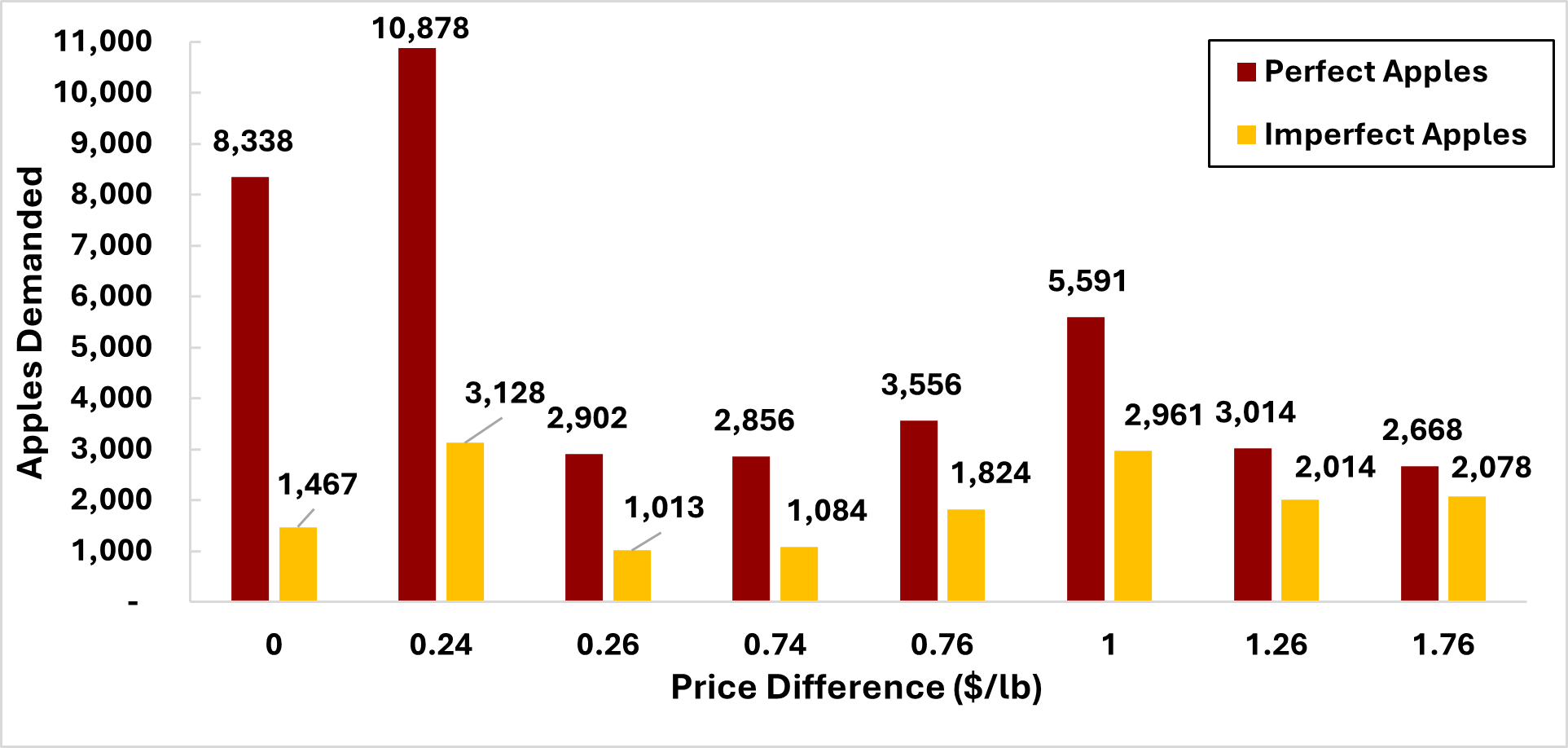
Fig 1. Total Demanded Quantity Based on Price Differences Between Perfect and Imperfect Apples in the Experiment
The Morrison School of Agribusiness at Arizona State University leads research that bridges agricultural economics, behavioral science, and market analysis—providing insights that inform agribusiness strategy and public policy.